A position, first of all
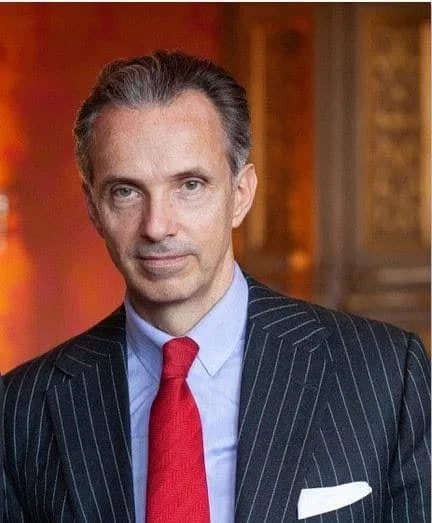
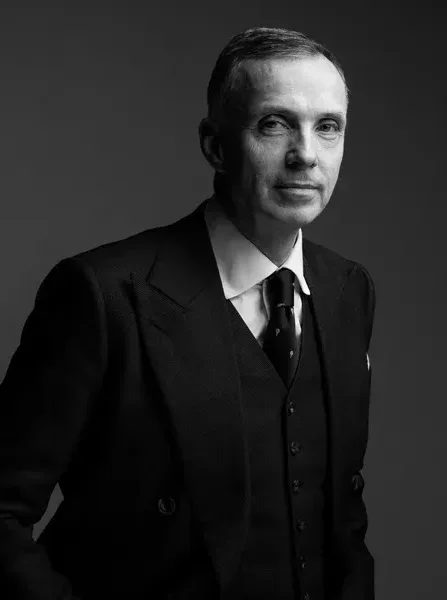
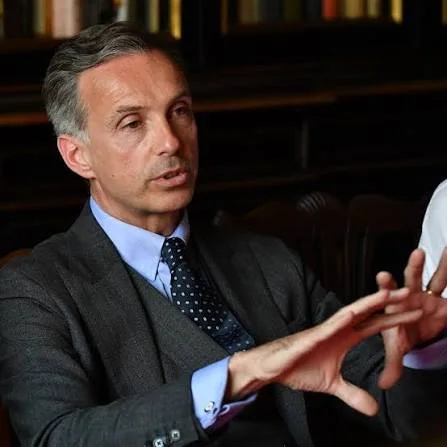
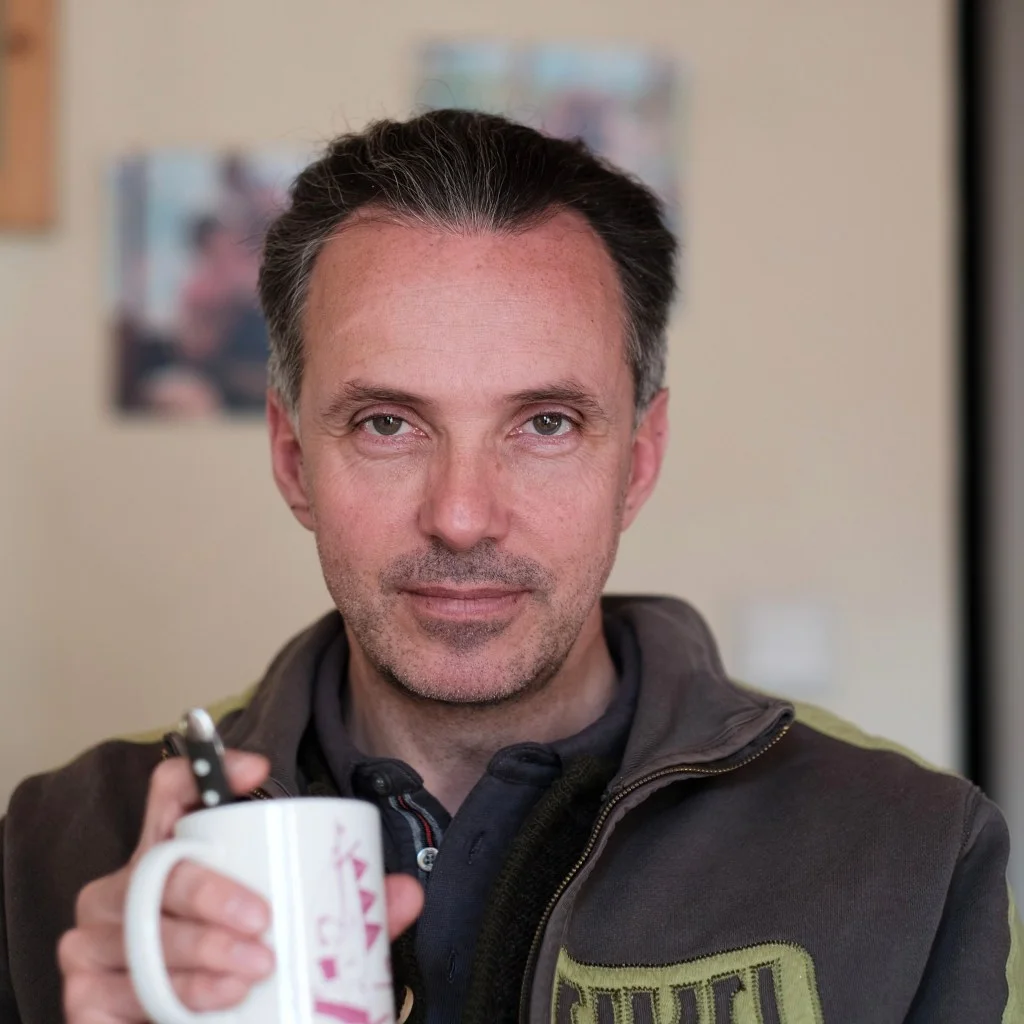
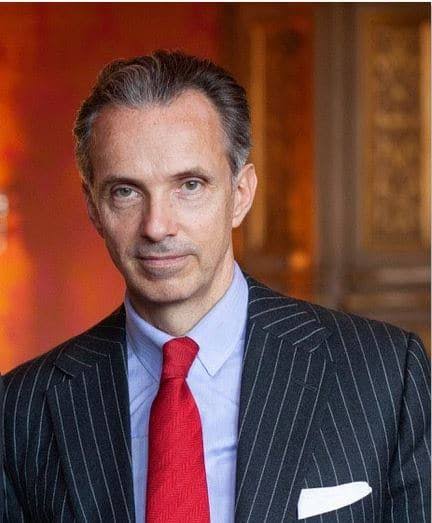
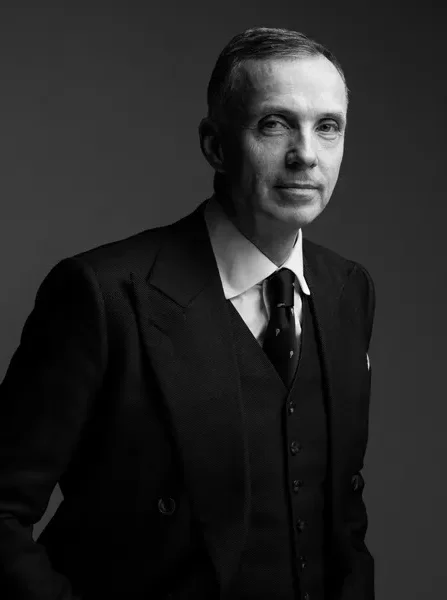
Henri de Grossouvre lives on the right bank of the Rhine and works in France. That everyday fact explains more about his work than any profile could: thirty years spent looking at Europe from its crossing points rather than from its capitals. His biography on X puts it in four words — smuggler of ideas, ferryman on the Rhine, essayist.
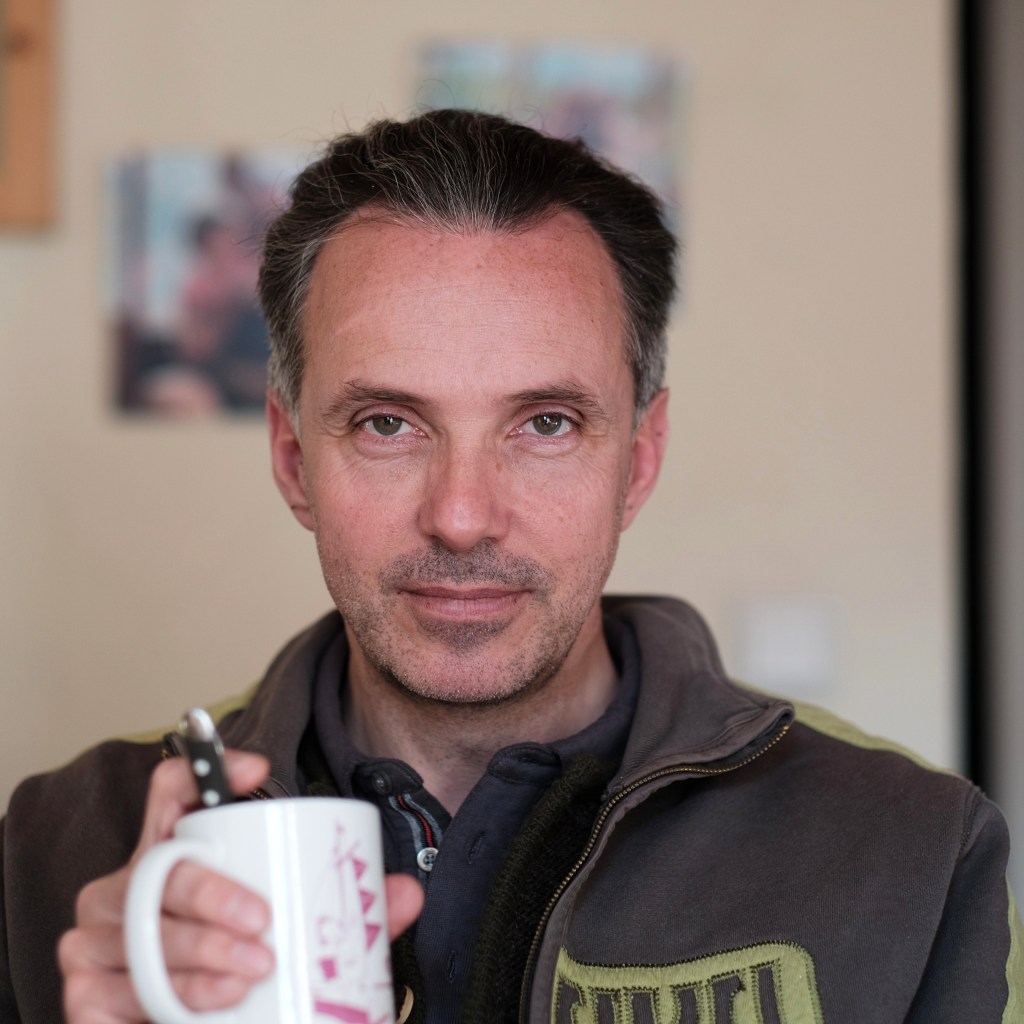
He grew up in the countryside, in the Bourbonnais. He has lived in Romania, Austria and Belgium. He competes at table tennis and show jumping. These details are not anecdote: they describe someone whose relationship to borders is empirical before it is theoretical.
Education
A graduate of the Institut d’études politiques de Strasbourg, International Relations class of 1989, he took a postgraduate diploma in international relations at the Institut des Hautes Études Européennes in Strasbourg — his dissertation was on Ukraine — and a master’s degree at the Sorbonne. He studied at the University of Bonn, where he wrote two dissertations in German, and at Harvard Summer School.
That education explains part of what followed. The site’s multilingualism is not a veneer: it extends a long-standing practice.
The industrial years
From 1998 to 2002 he ran Alcatel’s major accounts for Central Europe and Russia from Vienna. Four years in a commercial and industrial post, at a time when those markets were being entirely rebuilt.
This matters for understanding the rest of the work. He is not an academic writing about regions he knows from the literature: he negotiated in those countries before writing about them. When he casts Serbia as a hub in 2015, or places Central Europe in the European vanguard in 2007, the reading comes from somewhere other than a bibliography.
In 2002 he headed the support committees for Jean-Pierre Chevènement’s presidential campaign.
The published work
His first book appeared in April 2002: Paris, Berlin, Moscow: The Path to Independence and Peace, with L’Âge d’Homme, prefaced by General Pierre Marie Gallois, the man who had persuaded de Gaulle to give France a nuclear deterrent. Explicitly within a Europe of nations, the essay argues for a strategic partnership between a restored Franco-German core and Russia, across four named fields: energy, security, space, and the mastery of advanced technology.
Less than a year later, the joint opposition of France, Germany and Russia to the Iraq war turned those three names into a worldwide headline. The book was reissued in French, translated into Italian with Fazi Editore in 2004 — expanded by three chapters — and into Serbian in 2014.
Two collective works followed. For a European Europe (Xenia, 2007), which he edited for the Forum Carolus, prefaced by Minister for Industry François Loos with an afterword by János Perényi, proposes a vanguard of six countries — France, Germany, Belgium, Luxembourg, Hungary, Austria. The Strasbourg-Ortenau Eurodistrict (Xenia, 2010), co-edited with Professor Éric Maulin and prefaced by Strasbourg’s mayor Roland Ries, is a 478-page bilingual French-German volume, catalogued by the documentation centre of the INSP.
The journals
Between 2003 and 2021 he signed nine articles and op-eds in Revue Défense Nationale, published since 1939: on the revision of the Élysée Treaty, the Franco-German relaunch, the mastery of sovereignty technologies, European industrial independence, NATO’s Bucharest summit, pan-European security, Serbia, and technological cooperation between the European Union and China. Four of these texts carry an official English version published by the journal.
He also publishes in Revue Politique et Parlementaire, Revue Conflits, Le Figaro, Le Diplomate, Journal du Net and AgoraVox, where he has been a moderator since 2023. In 2004 he published in English in the Indian academic journal World Affairs an article still cited in 2022 by the Journal of Eurasian Studies.
The organisations
On 1 October 2004, François Loos, Minister for Industry, and Adrien Zeller, president of the Alsace Region, tasked him with creating and running a European think tank in Strasbourg. The Forum Carolus was born less than a year later; he was its general delegate until 2009. The forum organised symposia — including the 2006 one at the Council of Europe — and published two books.
In 2003 he founded the Paris-Berlin-Moscow network, which became the Geopolitical Network in August 2017, of which he has since been honorary president.
He is a board member of the Cercle Colbert, where with Professor Denys Pouillard he leads a working group on the future of local government, and a board member of the Fondation Baccarat. He sits on the board of the Sciences Po Strasbourg alumni association, where he runs a Paris lecture series held with the Cercle Colbert and the Fondation Jean-Jaurès. Since September 2026 he has been secretary general of the association Héritage & Civilisation — motto: “Vivre nos patrimoines, servir la paix” (living our heritage, serving peace) — on whose board he already sat. He is also a member of the Advisory Board of the think tank The KitSon, and formerly chaired KitSon Strasbourg.
In 2011 he co-founded, with Mike Molloy and Alain Gesiot, Le Jardin d’Alcinoos, which became in 2016 a social grocery in the 19th arrondissement of Paris, and which he chaired.
Today
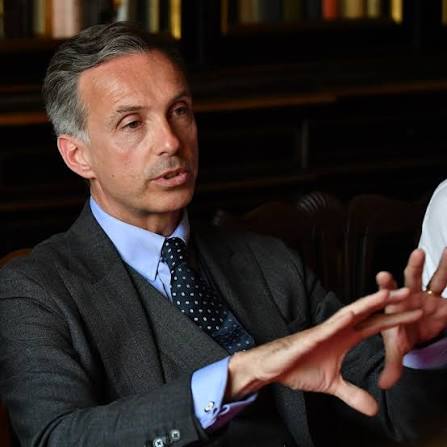
He is head of foresight at a major French group. He speaks in French, English, German and Italian, between ten and twenty times a year.