Skip to content
Henri de GrossouvreEssayist on European geopolitics
32

Publications

Books, journal articles, op-eds and collective work. Every entry links to its source.

3

The books

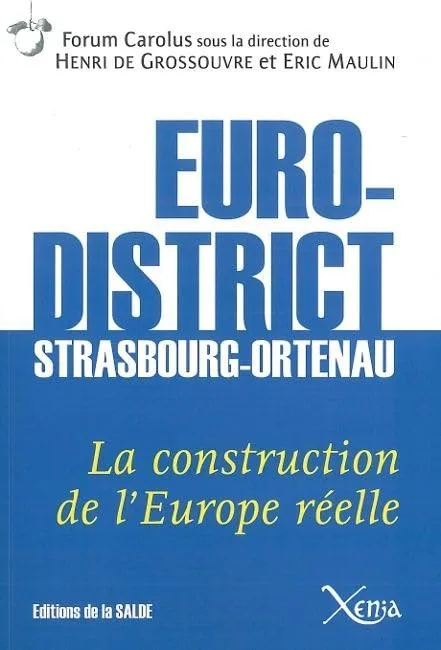
  • The Strasbourg-Ortenau Eurodistrict: Building the Real Europe

    Xenia · 2010 · 478 pages

    The Strasbourg-Ortenau Eurodistrict: Building the Real Europe (opens in a new tab)

    L'Eurodistrict Strasbourg-Ortenau : la construction de l'Europe réelle / Der Eurodistrikt Straßburg-Ortenau: Konstruktion eines lebendigen Europa

    A 478-page bilingual French-German volume, edited with Professor Éric Maulin for the Forum Carolus. It documents the Strasbourg-Ortenau Eurodistrict as a laboratory of cross-border cooperation: governance, shared public services, planning, daily life on both banks of the Rhine. Preface by Roland Ries, mayor of Strasbourg. The book is catalogued by the documentation centre of the INSP.

    Preface
    Roland Ries, mayor of Strasbourg
    ISBN
    978-2-88892-088-5
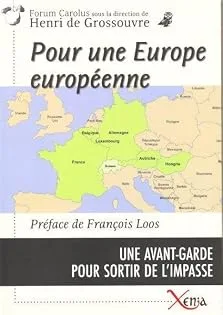
  • For a European Europe: A Vanguard to Break the Deadlock

    Xenia · 2007 · 192 pages

    For a European Europe: A Vanguard to Break the Deadlock (opens in a new tab)

    Pour une Europe européenne. Une avant-garde pour sortir de l'impasse

    A collective work of the Forum Carolus, edited by Henri de Grossouvre. It examines how a group of countries — France, Germany, Belgium, Luxembourg, Hungary, Austria — could form a vanguard and restart European political construction without waiting for unanimity among the twenty-seven. Preface by François Loos, Minister of Industry; afterword by János Perényi.

    Preface
    François Loos, Minister of Industry
    Afterword
    János Perényi
    ISBN
    978-2-88892-037-3
  • Paris, Berlin, Moscow: The Path to Independence and Peace

    Éditions L'Âge d'Homme · 2002 · 168 pages

    Paris, Berlin, Moscow: The Path to Independence and Peace (opens in a new tab)

    Paris, Berlin, Moscou : la voie de l'indépendance et de la paix

    Henri de Grossouvre's first book, prefaced by General Pierre Marie Gallois, the man who persuaded de Gaulle to give France a nuclear deterrent. Within a Europe of nations, the essay argues for a strategic partnership between a restored Franco-German core and Russia, covering energy, security, space and the mastery of advanced technology. Less than a year after publication, the joint French, German and Russian opposition to the Iraq war put “Paris-Berlin-Moscow” on front pages worldwide.

    Preface
    General Pierre Marie Gallois
    ISBN
    978-2-8251-1677-7
     
    Out of print

    Translations

    • Parigi Berlino Mosca. Geopolitica dell'indipendenza europea

      Parigi Berlino Mosca. Geopolitica dell'indipendenza europea

      Italian · Fazi Editore · 2004 · 978-88-8112-473-2

      The Italian edition carries three additional chapters, written in October and November 2003 for this publication.

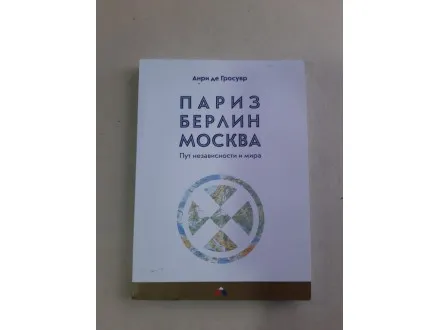
    • Париз Берлин Москва — Пут независности и мира

      Париз Берлин Москва — Пут независности и мира

      Serbian · Fondacija Dostojanstvo · 2014

      Serbian edition, 215 pages, signed “Anri de Grosuvr”.

29

Publications

29 publications

Op-ed7 August 2026

Nice: The Revival of a Key Strategic Role for France and Italy in Europe (opens in a new tab)

Le Cronache Lucane · Le Diplomate

The most recent argument: making Nice the pivot of a Paris-Rome axis. The author grounds the case in the city's long history — Greek foundation, Roman then Piedmontese inheritance, culturally Italian until the annexation of 1860 — and in the 2021 Quirinal Treaty, which he places, for the Franco-Italian pairing, where the Élysée Treaty stands for the Franco-German one. The partnership he describes is measured in capabilities: Mediterranean routes, defence industry, energy, digital infrastructure, capital. The text first appeared in Italian, in Le Cronache Lucane on 7 August 2026 — translated by Alessandro Sansoni — and then in French and English in Le Diplomate.

Collective op-ed23 June 2026

For the Restoration of Democratic Control over France's Military and Nuclear Commitments (opens in a new tab)

Le Diplomate, 32 signatories

A collective op-ed bringing together thirty-two signatories — among them Pierre Lellouche, Jacques Sapir, general officers and academics. The text calls for stronger parliamentary oversight of military commitments and puts forward nine measures, including constitutional reinforcement of Article 35, a legal definition of co-belligerence, and a mandatory parliamentary debate on vital interests. An institutional proposal, not a commentary.

Collective op-ed29 October 2025

Digital Sovereignty: “France Must Show the Same Ambition It Showed for Nuclear Power in the 1960s” (opens in a new tab)

Le Figaro, FigaroVox — 35 signatories

A collective op-ed signed by thirty-five public figures, Henri de Grossouvre among them, under the description “essayist specialising in international relations and European geopolitics”. The piece warns of French and European cloud dependence on providers subject to US law, discusses the “cloud at the centre” doctrine and SecNumCloud certification, and casts data as the key to artificial intelligence. Its central analogy — the same ambition as for nuclear power in the 1960s — restates in the present tense the argument set out in 2005 in Revue Défense Nationale.

Interview28 April 2025

Interview — The Return of the General (opens in a new tab)

Eagle Eye Explore, interview by Danijel Kulacin

An interview in English with Danijel Kulacin for Eagle Eye Explore, a news and analysis site covering the Balkans and south-eastern Europe; a Serbian version appears on the same site. Henri de Grossouvre argues that Donald Trump's election reshuffles the deck: NATO will decline, and Europeans must replace it with a defence of their own. He makes the case for a group of pioneer countries, gives Strasbourg a role in recasting the institutions, and refers to General de Gaulle's “Europe of nations”.

Op-ed31 January 2025

How Satellite Data Can Support Smart-City Solutions (opens in a new tab)

Journal du Net

Technologies born of military need turned into planning instruments: infrastructure monitoring, urban planning, natural-hazard management. The author names the obstacles — the cost of acquiring and processing data, inadequate computing infrastructure — rather than passing over them.

Op-ed18 April 2024

AI and Synthetic Voice: Could France Draw on the ELVIS Act? (opens in a new tab)

Journal du Net

Starting from the Tennessee statute protecting performers' voices against unauthorised synthesis, the author asks whether France should transpose it and whether Europe should harmonise. He sets out the tensions rather than resolving them: protection against creative freedom, the legal definition of “voice”, and the law's capacity to keep pace with the technology.

Article15 March 2024

War in Ukraine: Germany's Double Game (opens in a new tab)

Revue Conflits

The author argues that Germany pursues a contradictory strategy: public support for Ukraine — Patriot, Leopard — alongside discreetly maintained channels to Moscow. He contends that Berlin outsourced its energy to Russia, its security to the United States and part of its growth to China, and that the Zeitenwende owes more to economic calculation and to Zivilmacht than to geopolitical ambition.

Interview15 November 2021

Interview — France and Italy: More Common Ground Than Is Assumed (opens in a new tab)

Club Italie-France

An interview in which he argues that France and Italy share more common interests in financial matters than either does with Germany and the northern countries, and names space and transport as priority fields for cooperation. He states that Rome remains the spiritual and cultural heart of Europe. Five years before the Nice op-ed: the Paris-Rome argument is not a reaction to the news.

ArticleMarch 2021

The New International Landscape and Opportunities for EU-China Strategic Cooperation (opens in a new tab)

Revue Défense Nationale, n° 838

A collective article published in the file “Have we entered the post-Western era?”. The authors argue that decarbonisation demands greater international cooperation, and that this offers the European Union and China an opening to move past their antagonisms and build a shared project.

With François Loos, Joël Ruet, Fatima Hadj, Alex Wang, Jean-Claude Beaujour
Article30 December 2019

From Brégançon to NATO's London Summit: A New Strategic Line for France and Europe? (opens in a new tab)

Revue Politique et Parlementaire, Libre opinion

A reading of the August 2019 Brégançon meeting as the start of a strategic shift. The article develops two lines: re-engaging Russia as a European power, and forming a political vanguard — France, Germany, Italy, Belgium, Luxembourg — in the service of strategic autonomy, in defence as in technology. It deals explicitly with Brexit and British defence cooperation. One formulation stands out: Europeans have become the object rather than the subject of international relations.

Interview31 July 2019

Interview — “The European Union Without the British Will Be Forced to Rethink Itself” (opens in a new tab)

Limes, online edition (Limes Plus) — interview by Alessandro Sansoni

An interview in Italian, conducted by Alessandro Sansoni, for the online edition of Limes, the Italian review of geopolitics. Henri de Grossouvre is introduced as the author of Paris, Berlin, Moscou. The conversation covers Brexit, the Franco-German pairing, the appointments of Ursula von der Leyen and Christine Lagarde to head the European institutions, and what becomes of the Paris-Berlin-Moscow axis.

Article12 September 2018

Paris-Berlin-Moscow: A Renewed Relevance (opens in a new tab)

Revue Politique et Parlementaire, n° 1087-1088 — “Nation” dossier

Co-signed with Richard Kitaeff, president of the Paris-Berlin-Moscow Geopolitical Network. The authors argue that the Franco-German pairing alone does not generate enough continental weight, and make the case for industrial and cultural rapprochement with Russia.

With Richard Kitaeff
Op-ed29 January 2015

Serbia: New Hub Between EU Countries and Moscow (opens in a new tab)

Revue Défense Nationale, Tribune T606

Six pages on Serbia at a crossroads, after years of difficult relations with the European Union. The analysis casts the country as a hinge between the EU space and Moscow — ten years before the question returned to the centre of attention.

ArticleNovember 2008

NATO's Bucharest Summit: Europe / United States (opens in a new tab)

Revue Défense Nationale, n° 713

At the Bucharest summit of April 2008, President Bush set NATO membership for Ukraine and Georgia as a priority for Washington; a Franco-German move, coordinated with Moscow, denied them official candidate status. The journal's own English summary calls the episode a historic event illustrating America's relative geopolitical decline. Written in 2008.

ArticleOctober 2005

“Fortuna and a Europe of Power” (opens in a new tab)

Revue Défense Nationale, n° 679

The pivotal text in the corpus. Europe is set before a choice: a Europe of power built on a Carolingian core, or a Europe of markets reduced to a free-trade zone under someone else's strategic protection. The journal's own summary states that European leadership requires continental strategic cooperation in order to master sovereignty technologies. Twenty years before compute, models and data became exactly that.

Article2004

Paris, Berlin, Moscow: Prospects for Eurasian Cooperation (opens in a new tab)

World Affairs (India), vol. 8, n° 1, p. 40-52

An English-language article in the Indian academic journal World Affairs, extending the argument of the 2002 book eastwards into Eurasia. Its reach can be measured by its uptake: the reference appears in the bibliography of a 2022 article in the Journal of Eurasian Studies (SAGE), eighteen years on.

ArticleNovember 2003

We and the Americans (opens in a new tab)

Revue Outre-Terre, n° 5 (2003/4), p. 263-274

Published in November 2003 in the geopolitics journal Outre-Terre. France is described as Europe in miniature: the only country belonging to both northern and Mediterranean Europe, with three seaboards. The article argues for a Europe able to defend its own vital interests rather than rely on the United States. The author returns to this France of both the North and the Mediterranean in 2021, speaking of a Rhine vocation and a Mediterranean vocation, and again in 2026 in the Nice op-ed.

ArticleFebruary 2003

Revising the Élysée Treaty, Europe and Russia (opens in a new tab)

Revue Défense Nationale, n° 650

Written as the Élysée Treaty approached its fortieth anniversary. The author argues that France and Germany should use the revision to establish a confederation and jointly shape a European policy towards Russia, resting on shared economic, cultural and strategic interests.